Kia Ora Fetulele 2
Welcome to 2026.
It was so awesome meeting all of you on the first day and getting to know something about each of you. I am really excited about our learning journey together.
I will:
foster a safe and positive learning environment where students are not only building relationships with me, but also with each other.

It is my goal:
to challenge my students daily, with learning that is meaningful, engaging, and purposeful.
Maths Topic - Term 3-2026
Weeks 1 and 2 - NUMBER
*Locating integers on a number line
*Ordering whole negative and positive numbers using a number line
*Identifying the additive inverse of any number
*Representing addition and subtraction of integers using a number line
*Using negative numbers to solve problems in a range of contexts, including the measurement of temperature and finance
*Reading, writing comparing, and ordering whole numbers using powers of 10 (e.g. 10,000 = 10^4, 1000 < 10^4)
*Representing numbers in expanded form using powers of 10 (e.g. 34,506 = 3 × 10^4 + 4 × 10^3 + 5 × 10^2 + 6)
*Using exponents and identifying square roots for square numbers up to at least 144
*Using radicals (√) to represent square roots
*Using divisibility rules to identify numbers that are divisible by 2, 3, 4, 5, 6, 8, 9, and 10
*Finding the highest common factor (HCF) of two numbers under 100, and finding the least common multiple (LCM) of two numbers under 10
Week 3-Measurement -Perimeter, Area and Volume of 2D and 3D shapes
*Using formulae to find unknown measurements related to perimeter (e.g. the length of the unknown sides of a square given its perimeter, the length of an unknown side in a composite shape given its perimeter)
*Using formulae to find unknown measurements related to area (e.g. the base of a triangle given its area and height, the area of a figure composed of a triangle and rectangle, given side lengths)
*Using formulae to find unknown measurements related to volume (e.g. the dimensions of a cube given its volume, the volume of a rectangular prism given side lengths)
*Calculating the volume of composite figures made up of cubes, rectangular prisms, and/or triangular prisms.
MATHS HOMEWORK
Maths homework sheets are handed out each week and it is based on topics being covered in class.
This homework sheet is extremely important as it helps students master topics currently covered in class.
Personal Reading
Your child will be required to bring a home each night for personal reading. Please encourage your child to read for at least 30minutes each night [ if possible]
Literacy 2026 is Going to be so much fun
What will out literacy Lesson Look like:
We start with THE CODE - a spelling programme devised to help your child decode new words using spelling patterns.
We will talk about words, how to spell them by sounding out the word, breaking the word into syllables, identifying the dominant sound and then saying the word correctly. Finally we will discuss the meaning of the word in various contexts.
Morphemes - smallest unit of a word that has meaning eg. a suffix or prefix is a morpheme.
We plan to cover a range of journal stories and Novel Study where the class will study sentence types, the author’s intention and purpose and answer a range of inference questions.
Term 2 - Novel Study
Key objectives for a Year 7 and 8 novel study focus on deep comprehension, literary element analysis, and vocabulary growth. These goals help students build reading stamina and connect personally with texts.
Analyze character development, tracking how main figures change and react to conflict.
Examine the setting and how time, place, and culture shape the story.Identify core themes (such as friendship, courage, or identity) and find textual evidence to support them.
Engage in critical thinking through group discussions and sharing personal reflections on the story's events.
Create creative responses (such as writing, roleplay, or visual posters) to demonstrate understanding of the novel's key messages.
Fetulele 2 Sporting Highlights and School trips for 2026
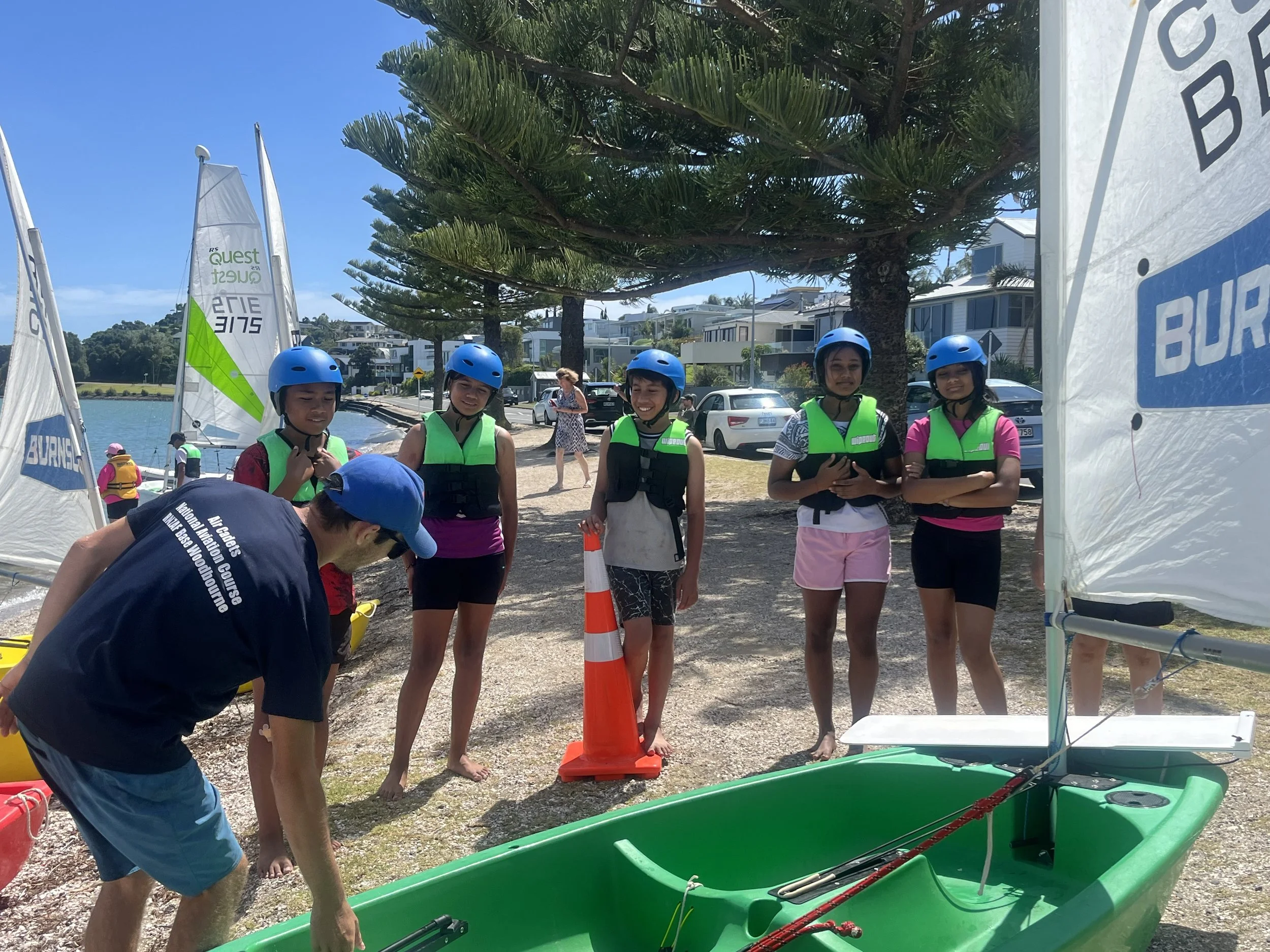
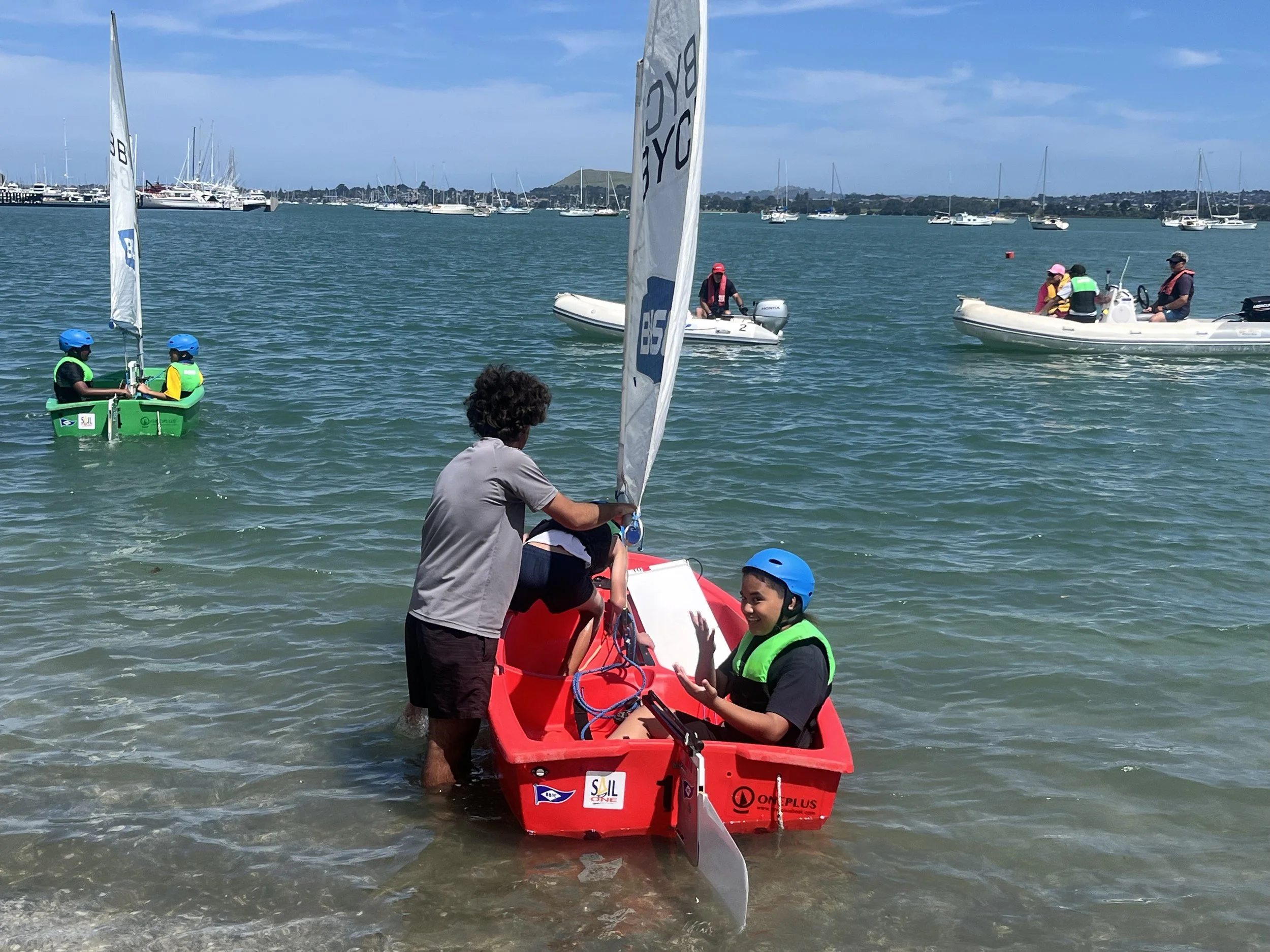
Sailing - 2026
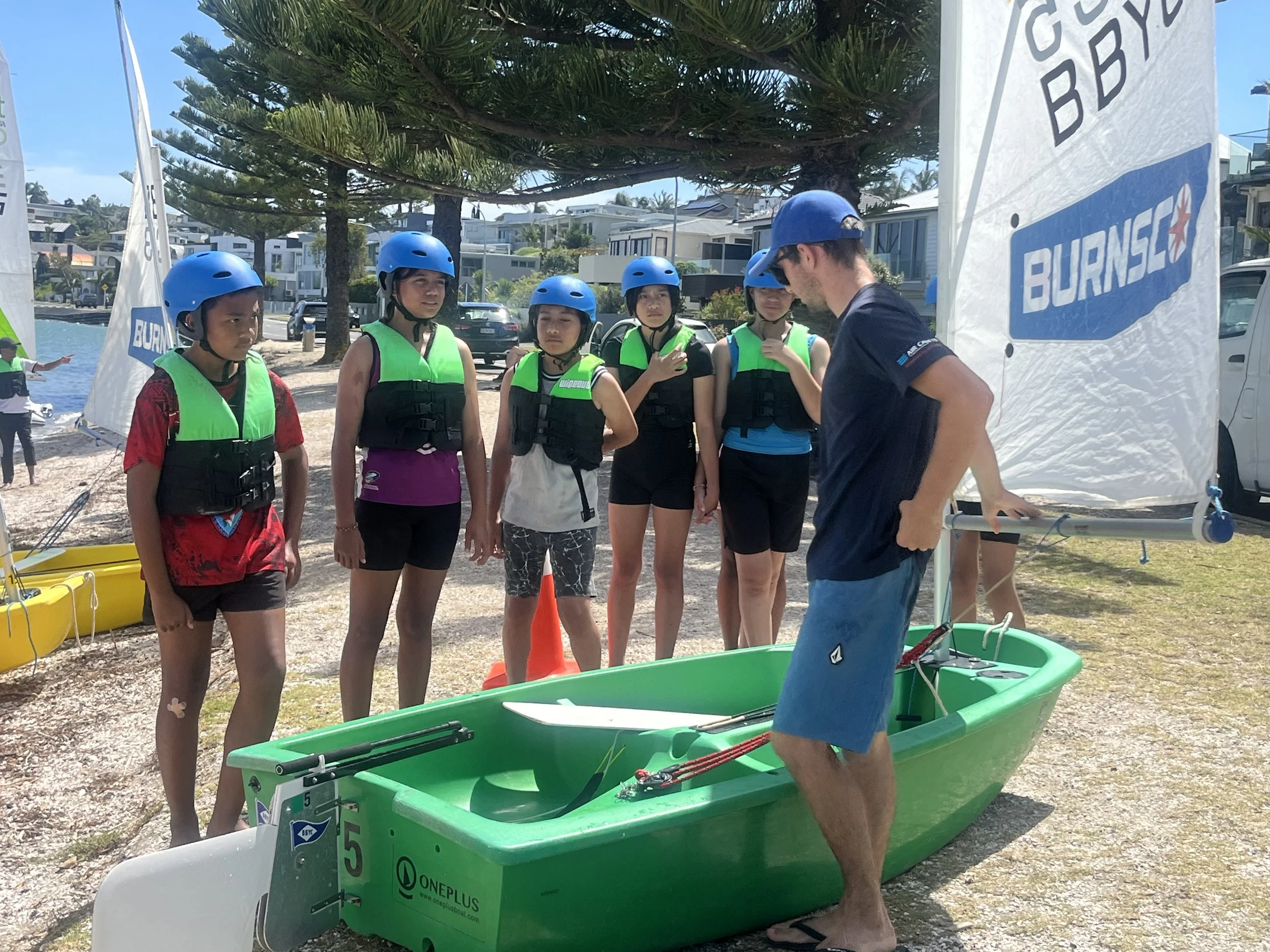
Fetulele 2 went on sailing trip to The Bucklands Beach Yach Club. What an incredible experience learning how to sail a boat.